
Bark beetles in Truckee and the Lake Tahoe region are one of the most destructive forces facing Sierra Nevada forests, and they’re nearly invisible until the damage is done. Every season we see the consequences firsthand: Jeffrey pines, white firs, red firs, and lodgepole pines that looked healthy in spring flagging red and brown by fall.
The good news is that bark beetles leave a trail of evidence before a tree is a total loss. Early detection is critical — once beetles have successfully colonized a tree, it cannot be saved and will need to be removed. But catching the signs of bark beetles early gives you a real chance to protect the surrounding trees before the infestation spreads.
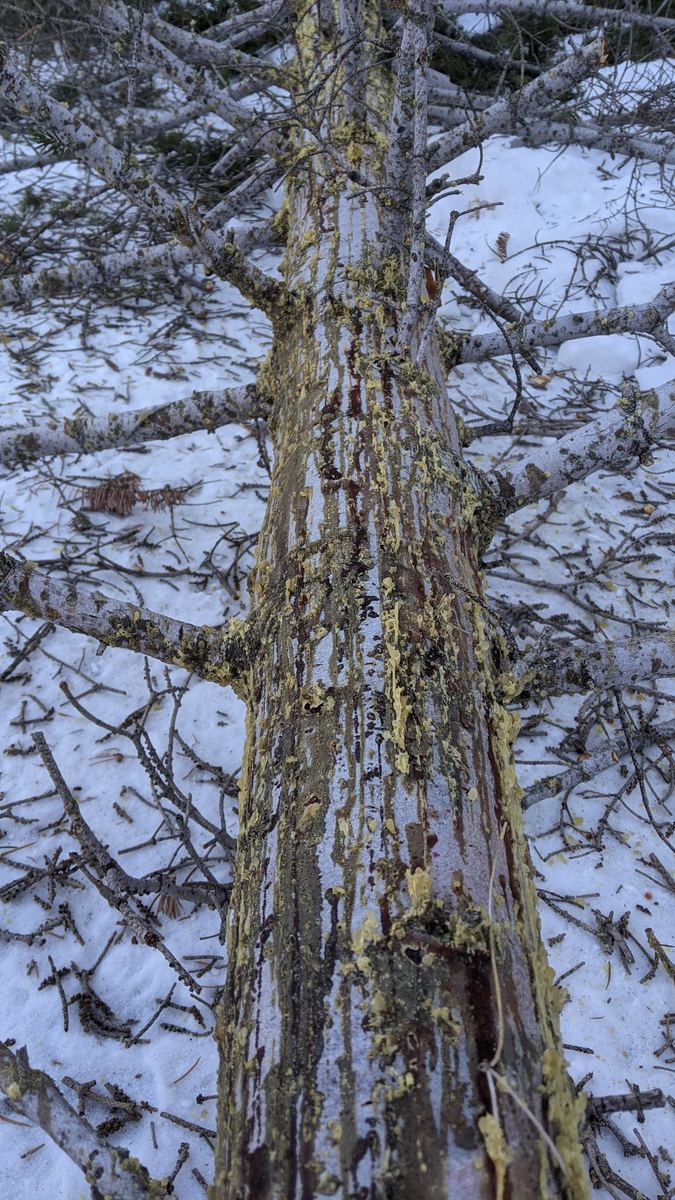
Once bark beetles have successfully colonized a tree, the tree cannot be saved. The goal of early detection is to catch stress conditions before infestation, or to act quickly on neighboring trees when one is lost.
5 Signs of Bark Beetles: How to Spot an Infestation
Pitch Tubes or Streaks of Sap on the Bark
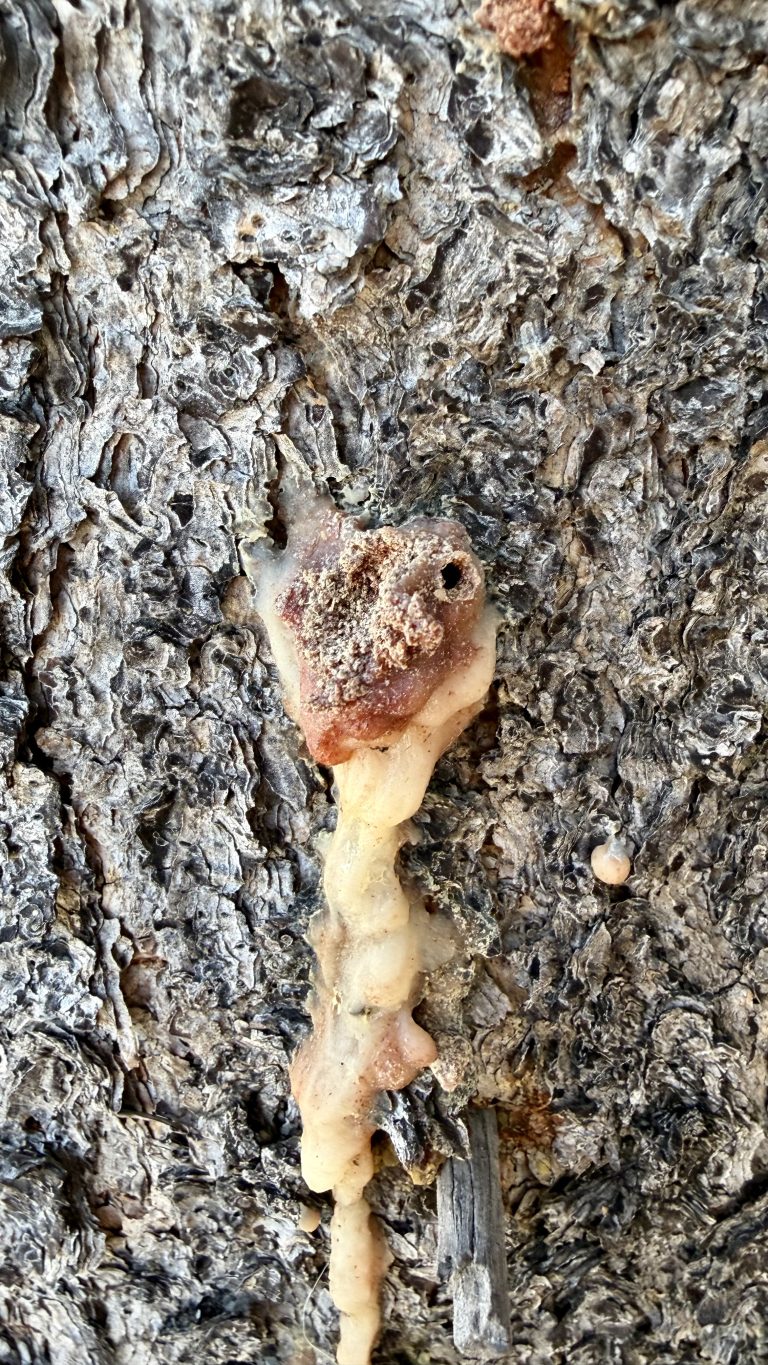
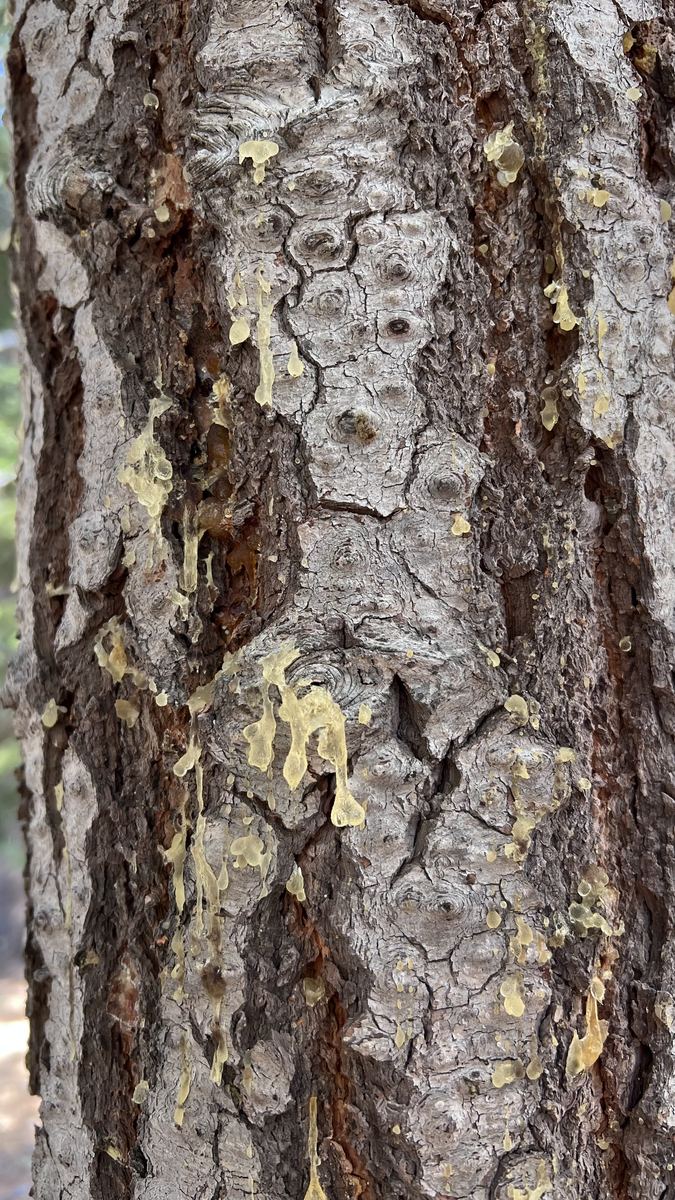
Small, popcorn-shaped blobs of resin on the outer bark of pines, white, cream, or reddish in color, are a tree’s attempt to push out attacking beetles. Multiple pitch tubes in the lower or mid trunk of pines, and streaks of excessive sap on fir trees, are a sign that your tree may be infested.
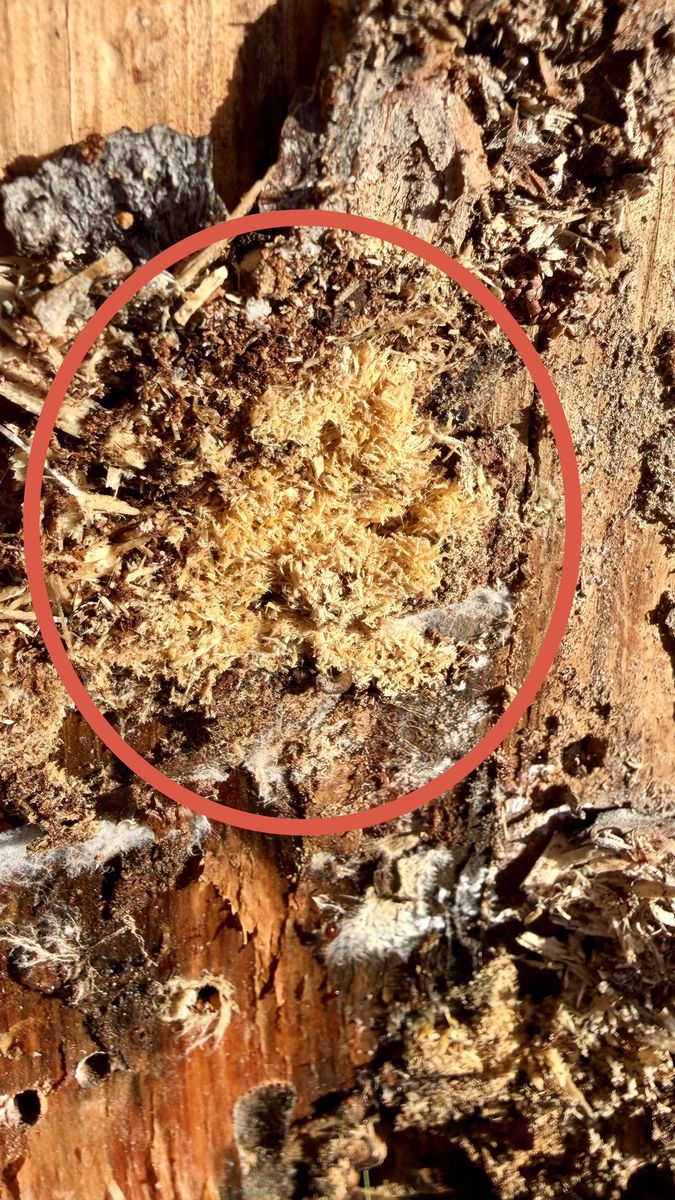
Fine Reddish Boring Dust (Frass)
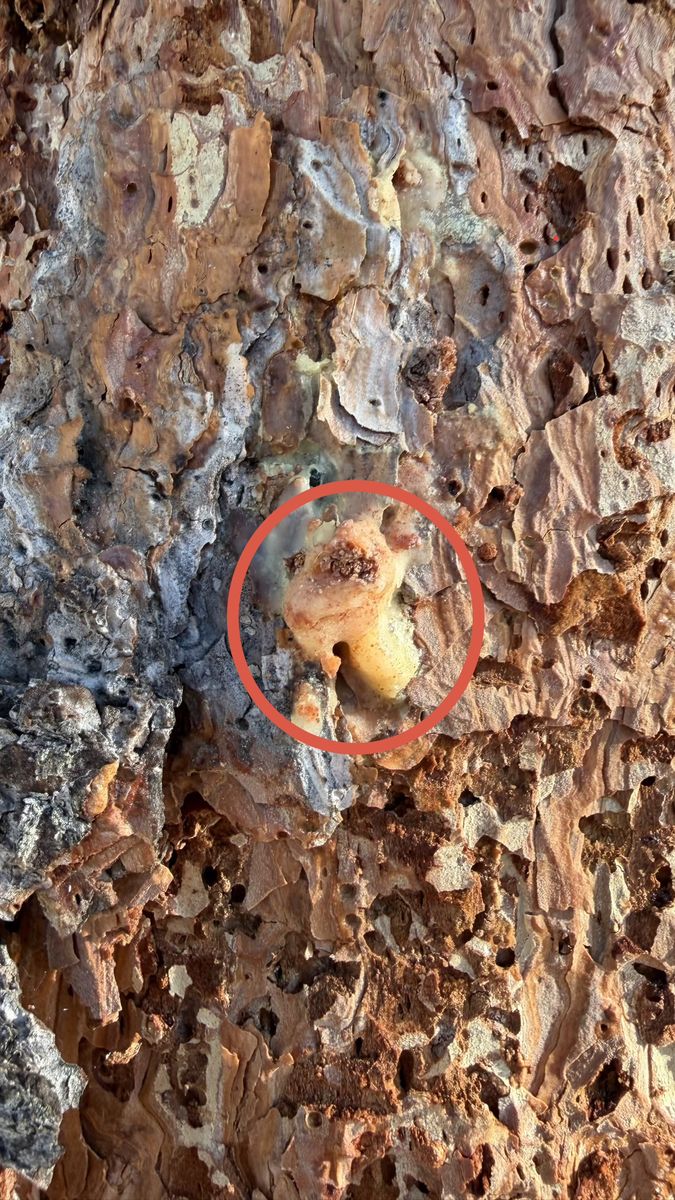
Powdery, reddish-brown frass, a mix of sawdust and beetle excrement, accumulating in bark furrows or at the base of the tree indicates active boring activity inside. Frass looks like fine sawdust and usually accumulates near the base of the tree, although frass can be a result of other insects besides bark beetles. Wood boring ants are typically the cause of this.
Fading or Yellowing Crown
Needles that shift from deep green to pale yellow-green, then orange-red, indicate the tree’s vascular system is being disrupted. This color change usually appears 4–6 weeks after infestation.

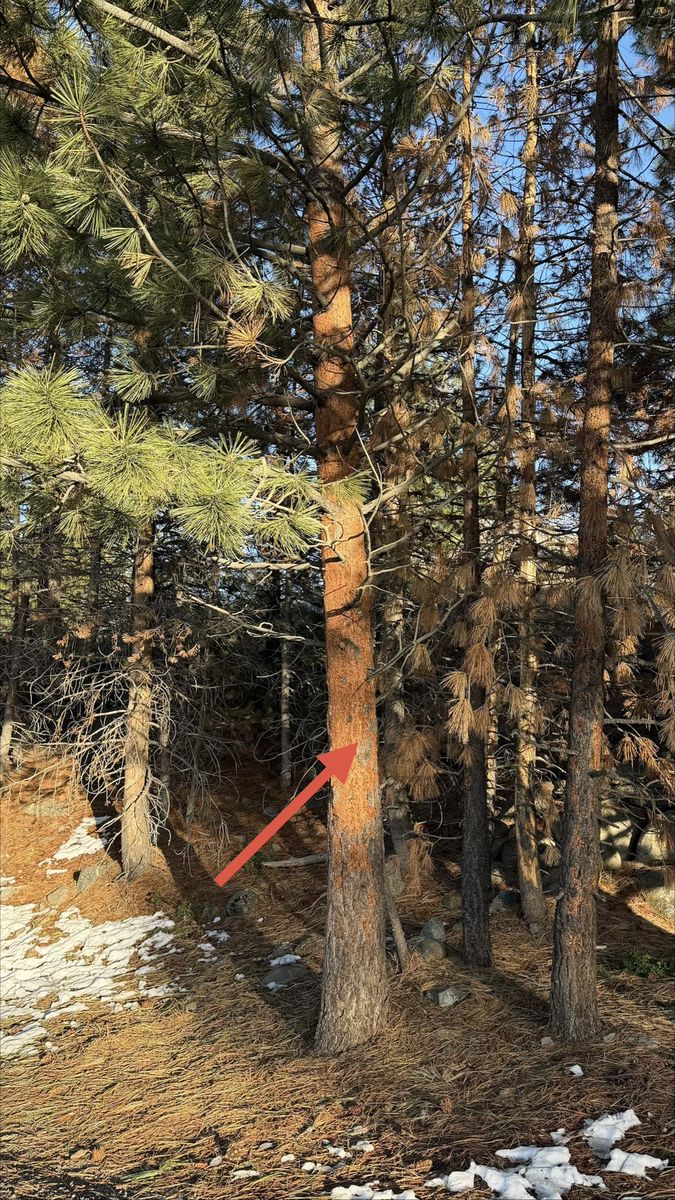
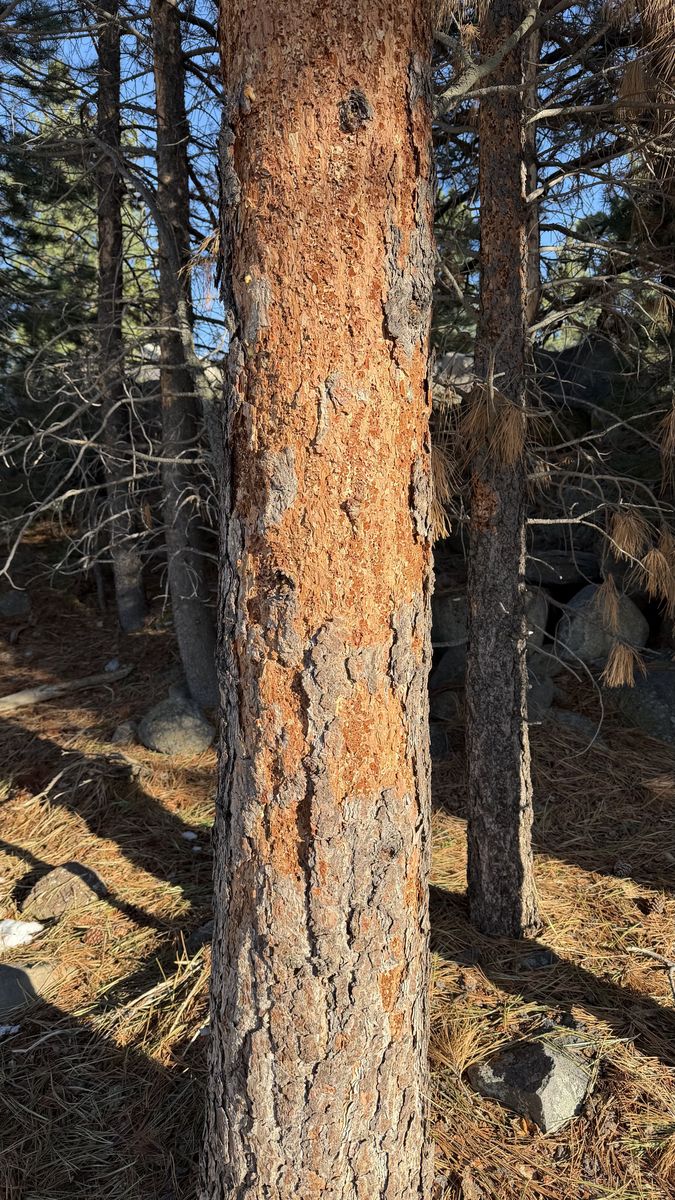
Woodpecker Activity
Heavy flecking or stripped bark patches from woodpecker feeding, especially on the mid to upper trunk, is a reliable secondary indicator that beetle larvae are present beneath the surface.
Mass Needle Drop
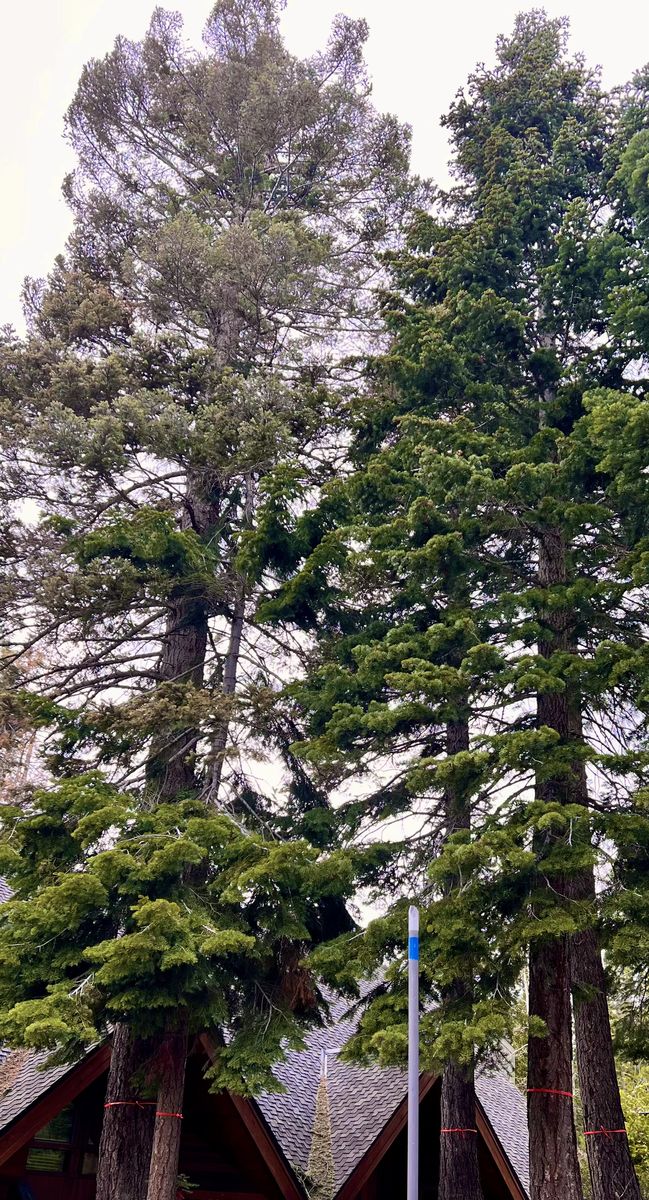
A fully infested tree will drop its needles in a matter of weeks. The needles may still be green when this happens. The tree’s canopy will appear more transparent and pine needles will accumulate under the drip line of the canopy. By the time this happens, the tree is considered dead and should be evaluated for removal. Standing dead trees in our fire-prone region are an immediate hazard.
Which Tree Species Are Most Vulnerable in the Truckee & Tahoe Region
The Truckee/Tahoe region hosts several bark beetle species, each targeting specific host trees. Drought stress, and we’ve had plenty of it, is the primary factor that weakens a tree’s natural defenses and makes it vulnerable to attack.
| Species | Host Trees & Notes |
|---|---|
| Western Pine Beetle | The leading killer of ponderosa pine in the Sierra Nevada. Attacks weakened trees first, then can build populations that overwhelm healthy ones. |
| Mountain Pine Beetle | Targets lodgepole, whitebark, and western white pine. Responsible for massive die-offs throughout the Sierra Nevada over the last two decades. |
| Jeffrey Pine Beetle | The primary insect parasite of Jeffrey pine. Endemic to Jeffrey pine and a major concern throughout the Tahoe Basin and greater Sierra Nevada. |
| Fir Engraver Beetle | Attacks white and red fir, often in conjunction with drought or root disease. Look for pitch tubes or streaking sap on the mid and upper crown, not just the trunk base. |
| Pine Engraver Beetle | Targets ponderosa, Jeffrey, and lodgepole pine, particularly trees that are already stressed or recently injured. Often appears alongside other bark beetle species, compounding damage to weakened trees. |
| Red Turpentine Beetle | Attacks the base of ponderosa and Jeffrey pine, typically targeting the lower two to four feet of the trunk. While a single attack rarely kills a healthy tree, repeated infestations or attacks in combination with other beetle species can be fatal. Look for large, reddish-brown pitch tubes clustered at the base of the trunk. |
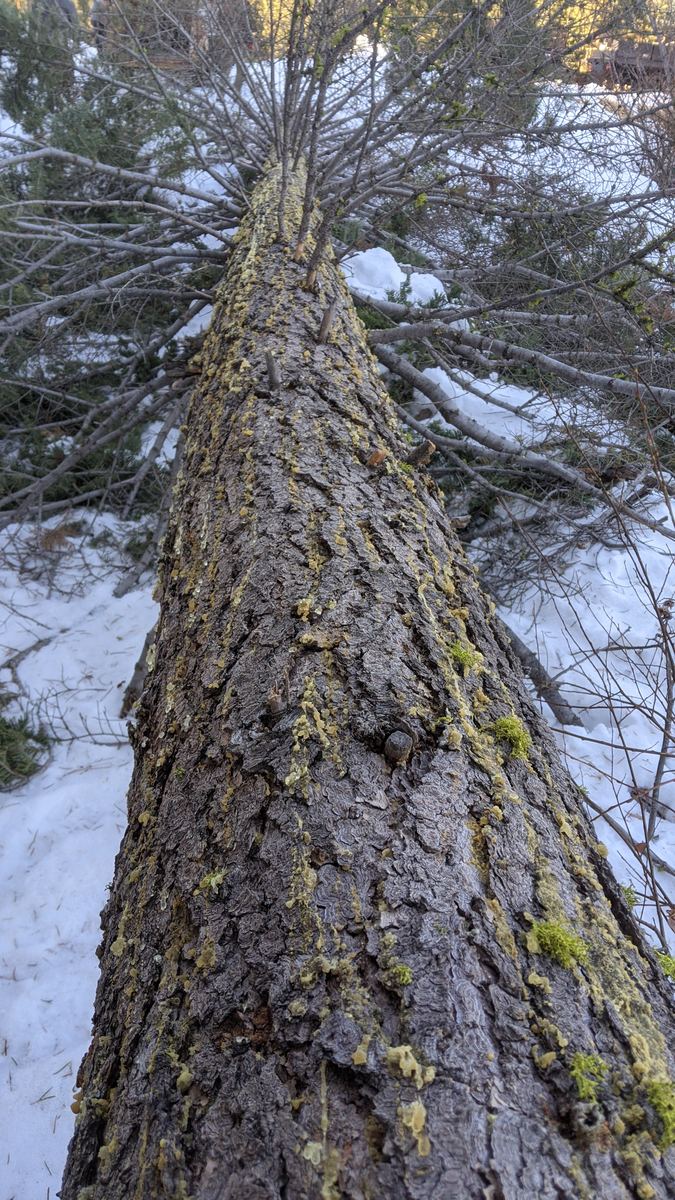
“A healthy, well-watered tree can often fight off a bark beetle attack on its own. The beetles target the vulnerable first: trees under stress from drought, root damage, or competition.”
What Raises a Tree’s Risk of Bark Beetle Attack
Bark beetles don’t attack at random. Understanding what makes a tree a target helps you prioritize which trees to monitor closely:
Drought Stress
This is the single biggest factor in our region. Trees under prolonged water stress produce less resin, their primary defense against boring insects. Even trees that appear healthy above ground may be struggling at the roots after a dry year.
Root Damage or Compaction
Construction, grading, or heavy vehicle traffic within a tree’s drip line can sever feeder roots and compromise vigor without any visible sign in the canopy, until stress symptoms appear years later.
Overcrowding and Competition
Dense stands of same-age trees compete for water and nutrients. Thinning overstocked timber stands is one of the most effective long-term strategies for reducing bark beetle pressure across a property.
Previous Injury or Disease
Trees with significant bark wounds, root rot, or canopy damage from past storms are preferentially targeted. Beetles can detect volatile compounds that stressed trees emit.
Protecting High-Value Trees: Verbenone Splat Applications
For trees you want to protect proactively, such as specimen pines near your home, high-value landscaping trees, or trees in a stand where neighbors have already been lost to beetles, verbenone offers a proven, EPA-registered prevention option.
What is verbenone?
Verbenone is a naturally occurring compound that mimics the chemical signal bark beetles use to indicate a tree is already fully colonized. When applied to a tree, it tells incoming beetles that this one is taken. It does not kill beetles or cure an existing infestation. It works as a repellent to deter new attacks on healthy or lightly stressed trees.
How SPLAT Verb works
SPLAT Verb (Specialized Pheromone and Lure Application Technology) is a waxy, slow-release verbenone formulation applied in small dollops directly to the bark. Unlike older verbenone pouches, the SPLAT matrix releases the compound gradually over the course of a full beetle flight season, typically late spring through summer in our elevation range. A single application per season is usually sufficient.
Best candidates for treatment
Verbenone is most effective on trees that are healthy or mildly stressed, before beetles have gained a foothold. It is best suited for individual high-value pines, particularly lodgepole, Jeffrey, and ponderosa, near structures, driveways, or in areas where beetle pressure is elevated. It is not a whole-forest solution, but it can meaningfully improve the odds for the trees that matter most on your property.
Timing matters
Applications should go on before the main beetle flight period begins in your area. In the Truckee/Tahoe region, this means targeting April through early June. Waiting until beetles are already active reduces effectiveness significantly.
Alpen Tree Experts applies SPLAT Verb as part of our tree health management services. If you have pines you want to protect heading into beetle season, contact us to discuss whether verbenone treatment makes sense for your property.
What To Do If You Suspect a Bark Beetle Infestation
If you’re seeing signs of bark beetles such as pitch tubes, excessive streaks of sap, boring dust, or early crown fade, time matters. Here’s how to proceed:
- → Don’t wait to see if it gets worse. By the time the crown goes fully red, the tree has been dead for weeks. If you’re seeing active signs such as pitch tubes with fresh resin, sap streaks, or boring dust, the infestation is ongoing.
- → Check neighboring trees immediately. Beetles spread radially from an infested tree. Walk the surrounding trees and look for the same signs within a 100-foot radius, particularly in the downwind direction.
- → Remove infested trees before beetles emerge. In our climate, bark beetles typically complete one generation per year, with adult flight occurring in late spring through summer. Trees removed and chipped before that flight window can reduce the population spreading to neighbors.
- → Don’t leave infested wood on site. Cut logs left in place can serve as a breeding source. Prompt chipping or off-site disposal is important, especially in high-risk periods.
- → Consider a professional assessment for high-value trees. For specimen trees or trees near structures, a certified arborist can assess whether any intervention options exist and advise on the best path forward.
Concerned About Bark Beetles on Your Truckee or Tahoe Property?
Alpen Tree Experts has been serving the Truckee and Tahoe region for over 20 years. We assess trees for bark beetle pressure, recommend removal of high-risk trees, and help you develop a long-term plan for your property’s forest health.
Schedule a Consultation