

Wildfire is a constant concern for communities throughout the Sierra Nevada, especially in areas like Truckee and Lake Tahoe where homes sit close to forests and natural landscapes. One of the most effective ways to protect structures and improve wildfire safety is by creating defensible space zones around homes and buildings.
Defensible space zones are designed to reduce wildfire intensity near structures by modifying vegetation, eliminating flammable materials, and creating strategic buffers between buildings and surrounding fuels.
What Are Defensible Space Zones?
According to the Truckee Fire Protection District:
Defensible space is the buffer area created between a structure and the surrounding vegetation, such as trees, shrubs, grass, or forested land. The purpose of this space is to slow or stop the spread of wildfire and reduce the likelihood that flames or embers will ignite a home. It also provides firefighters with a safer area to defend structures during a wildfire event.
Source: https://www.truckeefire.org/dspace
In California, state law requires property owners to maintain defensible space around structures in wildfire-prone areas. The standard requirement is generally up to 100 feet of defensible space, or to the property line if the parcel is smaller.
Source: https://www.readyforwildfire.org/prepare-for-wildfire/defensible-space
In mountain communities like Truckee and throughout the Tahoe Basin, defensible space requirements are strictly enforced due to the region’s high wildfire risk and dense forest conditions.
The Three Defensible Space Zones
Fire agencies in the Truckee–Tahoe region typically divide defensible space into three zones to help homeowners understand how to manage vegetation around their property.
To make wildfire mitigation easier to understand, defensible space is divided into three primary zones surrounding a structure. Each zone has specific vegetation management guidelines designed to reduce fire behavior as it approaches a building.
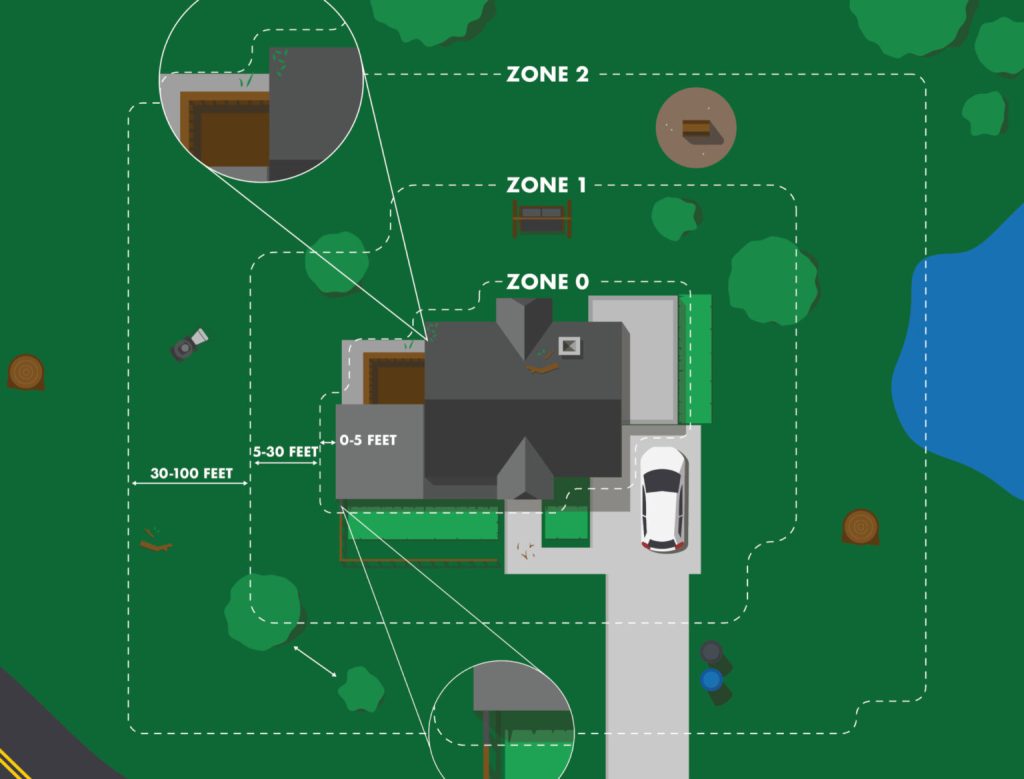
Image Source: https://www.readyforwildfire.org/prepare-for-wildfire/defensible-space
Zones According to the California Department of Forestry & Fire Protection:
Zone 0: The Ember-Resistant Zone (0–5 feet)
The first and most critical defensible space zone is Zone 0, which extends from the structure outward to about five feet. This area should contain little to no combustible material because wind-driven embers are one of the most common ways homes ignite during wildfires.
In this zone, property owners should remove dead vegetation, pine needles, mulch, and other flammable debris. Hardscape materials such as gravel, concrete, or pavers are often recommended to create a non-combustible barrier near the home.
Source: https://www.sandiego.gov/fire/community-risk-reduction/defensible-space-property-owners
Zone 1: The Lean, Clean, and Green Zone (5–30 feet)
The next defensible space zone extends from 5 to 30 feet from the structure. Vegetation is allowed here but should be carefully maintained and properly spaced to prevent fire from spreading directly to the home.
In this zone, homeowners should remove dead plants, prune tree branches, and reduce dense shrubs or ladder fuels that allow fire to climb from the ground into tree canopies. Proper spacing between trees and shrubs helps slow fire progression and reduce flame intensity.
Zone 2: The Reduced Fuel Zone (30–100 feet)
The outer defensible space zone typically extends from 30 to 100 feet from the structure. The goal in this area is to reduce the amount of vegetation that could carry fire toward the home while maintaining a natural forest appearance.
Trees and shrubs should be thinned and spaced to prevent fire from moving quickly through the landscape. Dead vegetation, fallen branches, and dense undergrowth should be removed regularly to keep fuel loads low.
Why Defensible Space Matters in the Tahoe Basin
The Truckee–Tahoe region sits within the wildland-urban interface, where homes and forested landscapes meet. In these environments, wildfire can spread rapidly through dense vegetation and reach structures quickly.
Creating and maintaining defensible space zones helps break the continuity of fuels near homes. By reducing vegetation density and removing flammable materials close to buildings, defensible space can significantly improve a structure’s chance of surviving a wildfire.
For homeowners in the Tahoe and Truckee area, defensible space is not just a recommendation—it is a critical part of living safely in a fire-prone landscape.
Learn More About Defensible Space
For detailed guidelines and local requirements, homeowners can review resources from wildfire preparedness organizations and local fire agencies such as:
These resources provide additional information on defensible space inspections, vegetation management, and best practices for protecting homes in wildfire-prone areas.
Contact Alpen Tree Experts today to learn about your options for creating a defensible space around your home.